

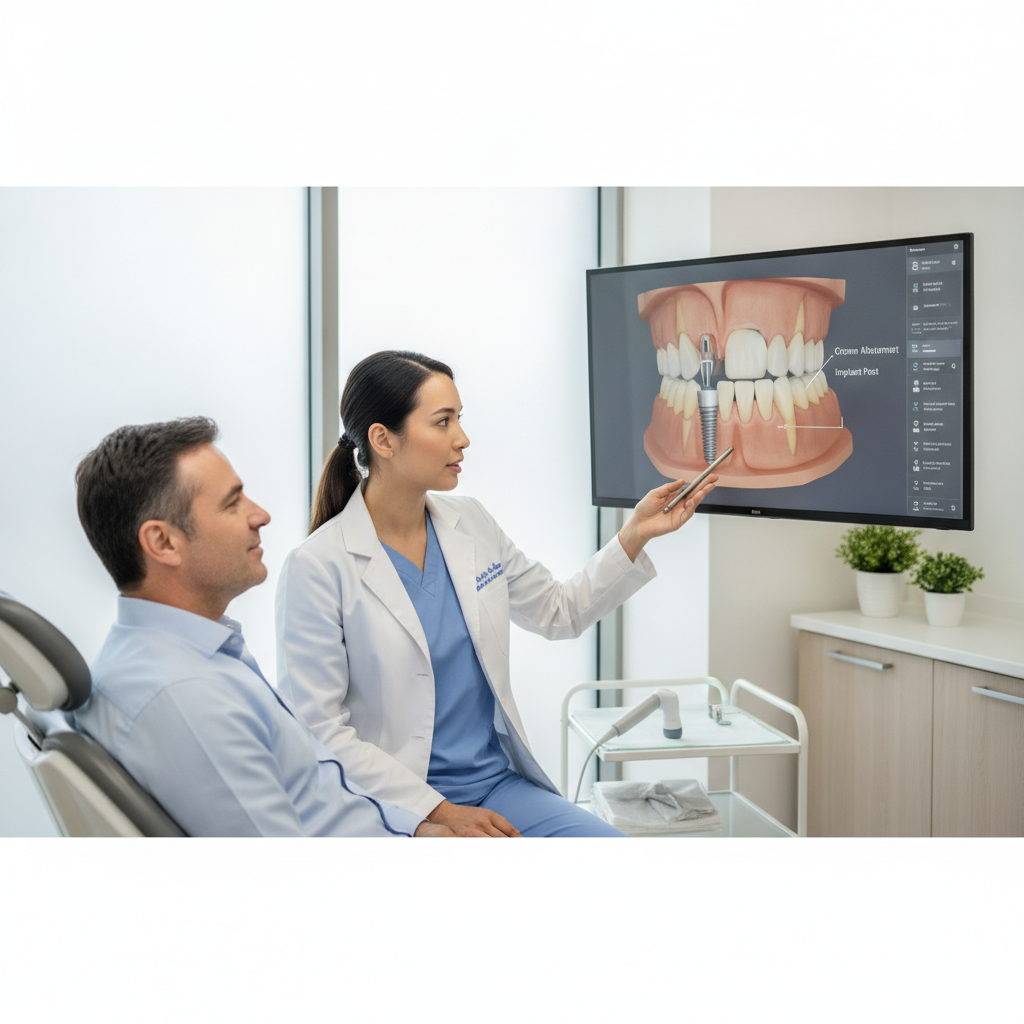
A missing tooth can make you think twice before biting into your favorite food or showing your whole smile in photos. If you’ve heard the term crown implant, you may be wondering whether it means a new crown on an old tooth or a complete tooth replacement.
At Golden Oak Sedation Dental & Implant Center in Cookeville and Crossville, TN, we help patients understand the difference and consider options based on the health of their teeth and jawbone.
What Is a Crown Implant?
A crown implant usually refers to an implant-supported crown. A small implant post is placed into the jawbone to replace a missing root, an abutment connects the parts, and a custom crown forms the visible tooth. A regular dental crown, by contrast, covers a natural tooth that is still present.
That difference matters because placing an implant requires surgery and healing, whereas restoring an existing tooth with a crown follows a different process. The right option depends on whether the natural tooth can be saved.
Benefits of Crown Implants
An implant-supported crown is secured to an implant rather than to the teeth beside it. It can restore chewing function, fill a gap, and help maintain the bone around a missing tooth. Replacing the tooth may also reduce unwanted changes in the bite over time.
The improvement isn’t just about appearance. Eating on both sides of your mouth again or smiling without drawing attention to a gap can make ordinary routines easier. Learn about protecting jawbone health after tooth loss.
The Dental Crown Procedure
A dental implant treatment begins with an evaluation, including an examination and appropriate images. If the area has enough healthy support, an implant may be placed in the jawbone. The bone then heals around it in a process called osseointegration.
Some patients receive temporary teeth during the healing stage. After appropriate healing, the final crown is fitted and checked for your bite. If bone grafting is required, it may add time to the process.
A Personalized Experience for Anxious Patients
Feeling nervous before implant surgery is understandable. Golden Oak Sedation Dental & Implant Center offers sedation dentistry options, and our team can discuss which methods fit your treatment and health history. Sedation is not a guarantee of an anxiety-free visit, so clear explanations and realistic expectations matter too.
Advanced Technology in Crown Implants
The practice uses cone-beam CT imaging and guided digital planning in implant care. These tools help clinicians evaluate anatomy and plan implant position. Its in-house lab can also support restoration design and fabrication.
The purpose of planning is to account for your anatomy and restoration needs, not to promise identical recovery times for every person. Your healing depends on several factors, including bone and gum health.
Choosing the Right Implant Option
A single missing tooth may call for one implant-supported crown. Multiple missing teeth may be replaced with an implant bridge, and patients missing most teeth could explore full-arch options. Read about full-mouth dental implants if a larger restoration is relevant to you.
Cost Considerations and Factors
Crown implant costs depend on imaging, preparatory procedures, the implant components and the restoration materials. Before treatment begins, ask for an estimate that shows the stages and what each one includes.
FAQs About Crown Implants
How painful is the crown implant procedure?
Local anesthesia is used for placement, and sedation may be available. Some soreness afterward is expected and varies by patient.
How long does the procedure take?
The complete process may take several months because the bone needs time to integrate with the implant. Preparation and healing vary.
Are crown implants suitable for everyone?
A clinician must assess general health, gum health and jawbone support before recommending an implant.
What care is needed afterward?
Brush and clean around the restoration as instructed and keep up with professional checks. A crown can need maintenance even when the underlying implant remains stable.
A Tooth Replacement That Feels Like You
Having a clear plan can make the prospect of replacing a missing tooth much less overwhelming. At Golden Oak Sedation Dental & Implant Center, we’ll help you understand the steps and decide whether a crown implant is right for your smile.