

Dental implants are artificial tooth roots that support crowns, bridges, or dentures. If you live near McMinnville, TN, and are weighing tooth-replacement options, this guide explains what dental implants are, who is a candidate, the steps involved, the risks, cost factors, and how to find quality dental implant care in McMinnville, TN. Read on for clear, practical information to help you decide and prepare for treatment.
What Are Dental Implants?
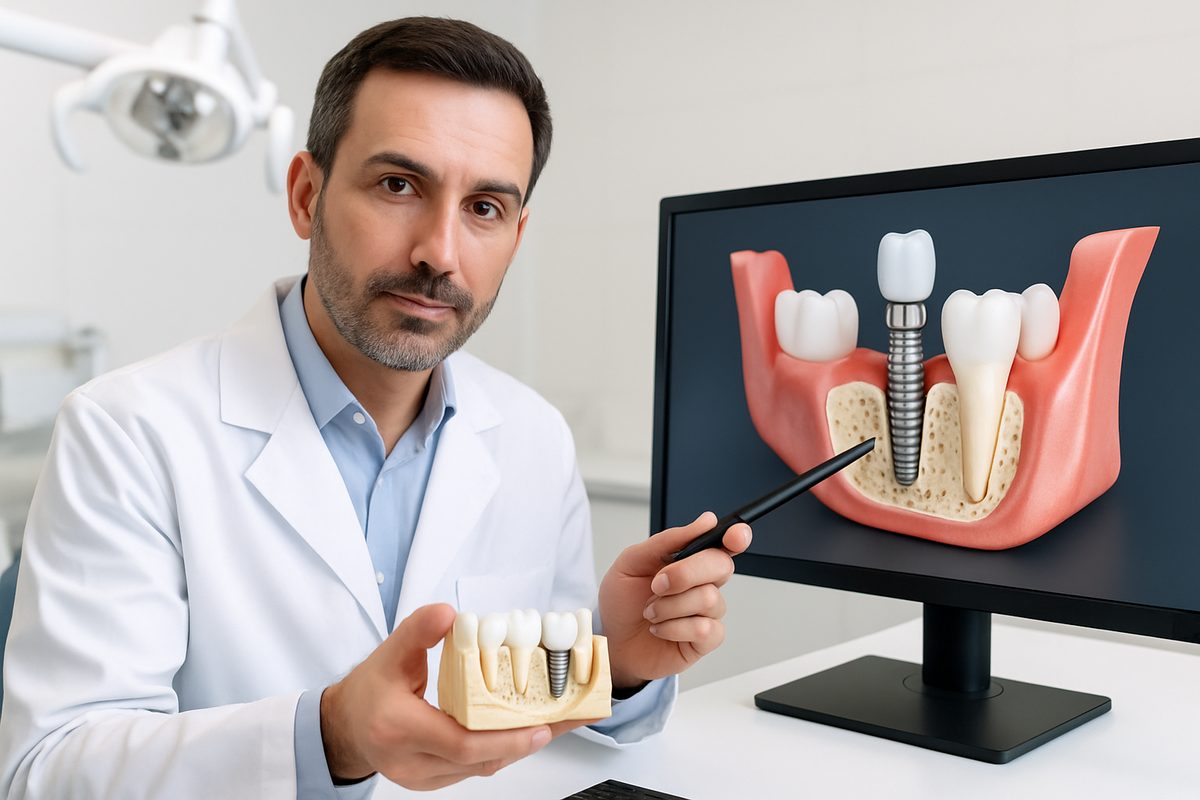
Dental implants are small titanium or ceramic posts placed into the jawbone to replace missing tooth roots. An implant usually has three parts: the implant body (root), an abutment (connector), and a crown, bridge, or denture that restores the visible tooth. Because implants fuse with bone, they restore chewing function and look like natural teeth while helping preserve jawbone volume and facial structure.
Who Is A Good Candidate For Dental Implants?
Single tooth vs. multiple teeth vs. full-arch
One implant can replace a single missing tooth with an implant-supported crown for a natural result. Several implants can support a bridge when adjacent teeth aren’t strong enough for a conventional bridge. Full-arch solutions use multiple implants to anchor permanent prosthetics or implant-retained dentures, offering much greater stability than traditional removable dentures.
Bone, gum health, and medical factors
Good bone volume and healthy gums are key to implant success. Active gum disease must be treated before placing implants. Medical conditions like uncontrolled diabetes, certain autoimmune disorders, and heavy smoking can raise the risk of failure. Your dentist will review your health history, medications, and habits to make a safe plan and optimize healing.
When advanced options are needed
Severe bone loss may require bone grafting or sinus lifts to create enough support for implants. In rare cases where the upper jaw is minimal, zygomatic implants anchor to the cheekbone rather than the jaw. These advanced options expand candidacy for patients who thought implants weren’t possible.
Types Of Implants And Restorations
Most implants are endosteal (placed in the jawbone). Zygomatic implants are longer and anchor into the cheekbone to address severe bone loss. Restorations include implant-supported crowns (single teeth), implant-supported bridges (multiple teeth), and overdentures or fixed full-arch prostheses. Materials for crowns and bridges include porcelain fused to zirconia or full-contour zirconia. Same-day provisional restorations and digital milling (CEREC) can provide temporary or final crowns more quickly.
The Dental Implant Treatment Process — Step By Step
Consultation and digital planning
Your first visit includes a health review, exam, and imaging. CBCT scans give 3D views of bone and nerves. Intraoral scans create digital impressions. This data is used with planning software to map implant positions, choose sizes, and prepare surgical guides for precise placement.
Surgical placement
Surgery is usually outpatient. Sedation options range from local anesthesia to nitrous oxide or IV sedation for anxious patients. Surgical guides—often 3D-printed—help place implants exactly where they were planned. The procedure typically involves small incisions and precise drilling to seat the implant in bone.
Healing and osseointegration
After placement, bone grows around the implant in a process called osseointegration. This takes 3–6 months for most cases. During healing, you may receive a temporary crown or denture to maintain appearance and function while protecting the implant site.
Final restoration
Once integrated, the final abutment and crown, bridge, or denture are fabricated. In-house labs and same-day milling (CEREC, Ceramill) can shorten wait times and improve quality control. The final restoration is adjusted for fit, bite, and aesthetics to look and feel natural.
Risks, Complications, And How To Reduce Them
Common risks include infection, implant failure, poor positioning, and rare nerve injury. Warning signs are persistent pain, swelling, pus, or numbness. Risk is reduced through thorough planning (CBCT imaging, digital planning), the use of surgical guides, selecting clinicians with implant training, and maintaining excellent oral hygiene before and after surgery.
Cost Factors For dental implants mcminnville tn
Several items determine cost: the implant body, abutment, crown or prosthesis, lab fees, CBCT scans, surgical guides, bone grafts or sinus lifts, and anesthesia. Complex cases with multiple implants or full-arch reconstruction cost more. Practices with in-house labs, digital workflows, and same-day tech can reduce lab fees and treatment time, which may lower overall costs for dental implants in McMinnville, TN.
Insurance, financing, and saving tips
Dental insurance often covers part of restorative work, but rarely covers the full cost of an implant. Expect limits on crowns or bridges that can be applied to implant restorations. Ask about third-party financing, in-house payment plans, or medical financing companies. Bundled case pricing and in-house lab work can also save money over time.
Alternatives To Dental Implants
Alternatives include traditional bridges and removable dentures. Bridges are less invasive initially but require prepping adjacent teeth and may not prevent bone loss. Removable dentures are the least expensive but can be unstable and accelerate bone loss. Implant-supported dentures and bridges combine the benefits of implants with fewer implants, offering improved stability and comfort compared to removable options.
Recovery And Long-Term Care
Recovery from implant surgery commonly involves swelling and mild discomfort for a few days, managed with prescribed or over-the-counter pain meds. Eat soft foods and avoid smoking during healing. Follow-up visits monitor osseointegration. Long-term care includes daily brushing and flossing, avoiding hard objects, regular dental cleanings, and periodic check-ups to ensure implants and restorations remain healthy.
How To Choose A Provider Near McMinnville, TN
Look for clinicians with formal implant training, restorative expertise, and experience with CBCT and digital workflows. Verify credentials, ask for before-and-after photos, and read verified patient reviews. A technology checklist should include CBCT imaging, high-accuracy intraoral scanning (Primescan), 3D printing, CEREC or a similar same-day milling system, and an in-house lab. Also, confirm sedation options if you have dental anxiety.
Common Questions About dental implants mcminnville tn
Q: How long do implants last?
A: With proper care, implants commonly last 20+ years and often a lifetime. The prosthetic crown may need to be replaced sooner.
Q: Is implant surgery painful?
A: Most patients report manageable discomfort. Sedation and modern techniques make the procedure comfortable.
Q: What are success rates?
A: Success rates exceed 95% for healthy patients when placed and maintained properly.
Q: Is there an age limit?
A: Adults of most ages can receive implants if their bone and health are suitable. Younger patients must have finished jaw growth.
Q: When can I eat normally?
A: Soft foods are recommended for the first few days to weeks; full function returns after osseointegration and final restoration.
Why Choose Golden Oak Sedation Dental & Implant Center Near McMinnville, TN
Golden Oak Sedation Dental & Implant Center, located in McMinnville and serving the Cookeville area, focuses on compassionate implant care with advanced technology and sedation options. Their team emphasizes comfort, efficient workflows, and comprehensive planning to reduce surprises and, when possible, speed treatment.
Dr. Johnny Shanks — credentials and approach
Dr. Johnny Shanks, DDS, trained at the University of Tennessee and completed advanced restorative education at the Kois Center. He blends restorative skills with implant training to plan cases that balance function and appearance, prioritizing patient education and comfort throughout treatment.
Technology and advantages
Golden Oak offers an in-house dental lab, 3D printing for guides and restorations, CBCT scanning, Primescan intraoral scanning, CEREC same-day milling, Ceramill milling, and sedation options including nitrous and IV sedation. They also provide zygomatic implants for severe upper-jaw bone loss, expanding options for more patients.
What patients can expect at Golden Oak?
Patients can expect digital planning, precise surgical guides, and reduced turnaround times thanks to the in-house lab. Sedation options make longer cases manageable for anxious patients. The practice aims to coordinate treatment so visits are efficient and predictable.
How to Schedule A Consultation For dental implants mcminnville tn
Bring a list of medications, dental records or recent X-rays if available, and any questions. The consult includes a health review, oral exam, CBCT scan if needed, and a treatment plan with cost estimates and timelines. Ask about financing, sedation, and what to expect during recovery. If you’re near McMinnville, TN, and ready to explore options, request a consult or a virtual visit to start planning your dental implants.