

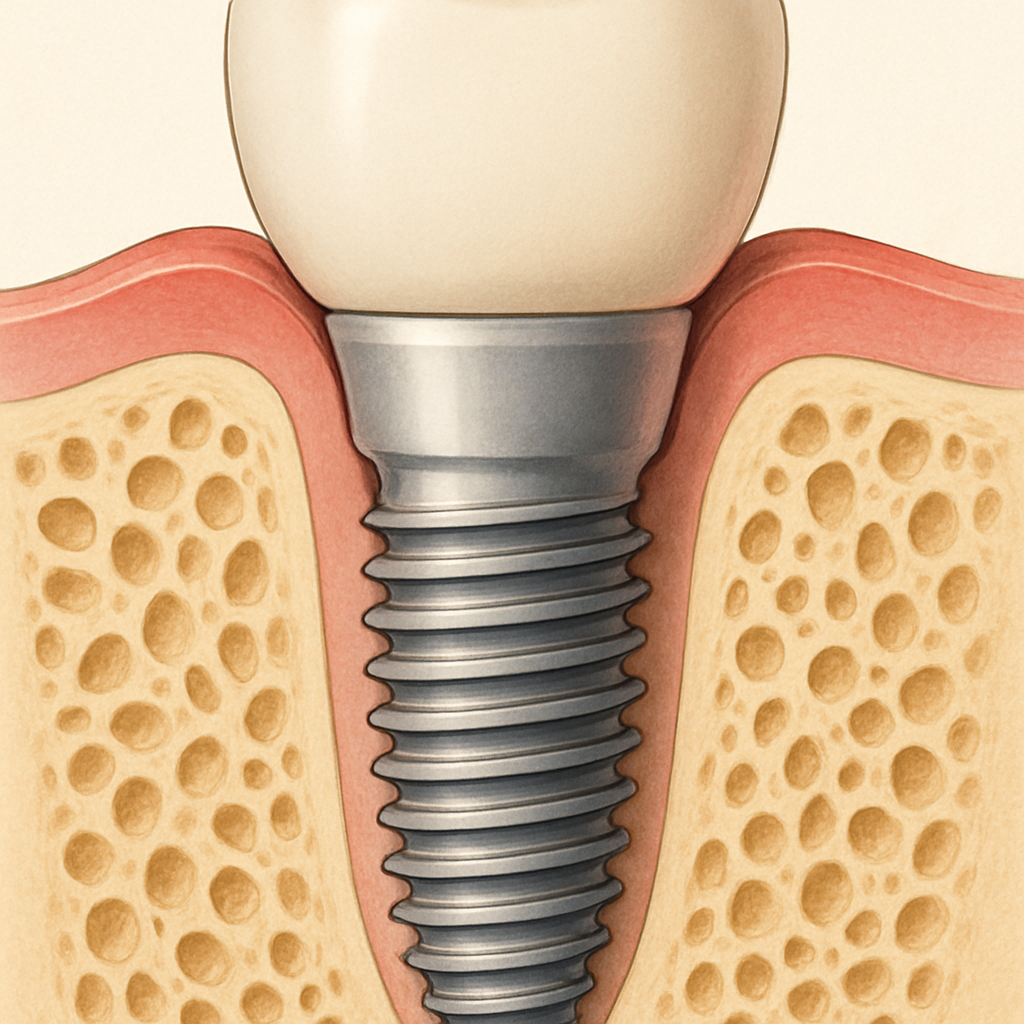
A dental implant post is the metal or ceramic “root” placed into your jaw to hold a replacement tooth. It’s the foundation that makes implants stable and long-lasting. This article explains what a dental implant post is, how it differs from an abutment and a crown, how posts are placed and cared for, potential risks and costs, and how modern technology improves outcomes.
What Is a Dental Implant Post?
A dental implant post is the part of an implant that sits in the jawbone and fuses with bone to replace a missing tooth root. It’s different from the abutment (the connector) and the crown (the visible tooth). A properly placed dental implant post in Cookeville, TN, acts like a natural root, giving strength and stability to the final restoration.
Key Parts: Post vs Abutment vs Crown
The implant post (fixture)
The implant post, usually a screw made of titanium or zirconia, is surgically placed into the bone. It’s designed to encourage bone to grow around it (osseointegration), so it becomes firmly anchored.
The abutment
The abutment is a small connector attached to the post after healing. It projects above the gumline and supports the crown or prosthesis. Some abutments are angled to improve fit.
The crown or prosthesis
The crown is the visible tooth replacement. Options include single crowns, implant-supported bridges, or full-arch dentures. Materials vary from porcelain to hybrid acrylic, depending on strength and aesthetics.
Materials and Types of Dental Implant Posts
Most posts are titanium because it’s strong and highly biocompatible. Zirconia posts are ceramic and more tooth-colored, which can help in very aesthetic areas. For severe bone loss, zygomatic implants anchor into the cheekbone. Your dentist will recommend the best type based on bone, health, and appearance goals.
How the Dental Implant Post Is Placed: Step-by-Step
Evaluation and planning
Careful planning uses exams, CBCT scans, and digital impressions. These tools map the position of bones, nerves, and sinuses so the post can be placed safely and at the right angle.
Surgery and placement
Surgery can be done with local anesthesia, nitrous, or IV sedation. A small incision exposes the bone, a pilot hole is drilled, and the post is seated. Surgical guides made with 3D printing can improve precision.
Healing and osseointegration
Bone healing around the post takes weeks to months. Once fused, the abutment and crown are placed. Temporary restorations may be used during healing.
Recovery and At-Home Care for Your Dental Implant Post
Short-term care includes pain control, soft foods, ice for swelling, and follow-up visits. Long-term care is like natural teeth: brush twice daily, floss around the implant, and keep regular dental checkups. Avoid smoking and hard habits that stress the implant.
Risks, Complications, and When to Call Your Dentist
Rare complications include infection, failure of osseointegration, nerve irritation, or sinus issues. Call your dentist for severe pain, swelling that worsens after a few days, pus, loosening, or numbness.
How Long Does a Dental Implant Post Last?
With good care, implant posts often last decades. Factors like smoking, poor oral hygiene, uncontrolled diabetes, or heavy grinding can shorten lifespan. Repairs or replacements may be needed if the crown or abutment wears or if bone loss occurs.
Factors That Impact the Cost of a Dental Implant Post
Costs depend on material (titanium vs zirconia), number of implants, bone grafts, CBCT imaging, surgical guides, and lab work. Ask about financing and whether portions are covered by dental insurance.
Why Advanced Technology Matters for Dental Implant Posts
CBCT, digital scanners (Primescan), 3D-printed surgical guides, CEREC same-day restorations, and an in-house lab improve accuracy, speed, and outcomes while often reducing complication risk.
Questions to Ask Your Implant Dentist About the Dental Implant Post
Ask about the dentist’s training and success rates, CBCT use, guided surgery, sedation options, material choices, warranty, and whether restorations are done in-house.
About Golden Oak Sedation Dental & Implant Center and Dr. Johnny Shanks
Golden Oak Sedation Dental & Implant Center in Cookeville, TN, focuses on implant dentistry with an in-house lab, CBCT-guided surgery, 3D printing, and sedation options. Dr. Johnny Shanks trained at the University of Tennessee and the Kois Center and combines advanced techniques with patient-centered care.
Next Steps: Book a Consultation to Discuss a Dental Implant Post
At a consult you’ll get an exam, CBCT if needed, and a personalized plan and cost estimate. If you’re considering a dental implant post in Cookeville, TN, schedule an evaluation to learn your options and next steps.